 If you’ve followed me for a while, you know I believe there is tremendous power in understanding what is happening in our bodies, especially during perimenopause.
I know this one personally.
During my own perimenopause journey, I experienced many of the symptoms associated with what is often called estrogen dominance. But here’s something many women don’t realize: estrogen dominance doesn’t necessarily mean you have too much estrogen.
It can mean you have too much estrogen relative to progesterone.
As we enter perimenopause, ovulation often becomes less consistent. When we don’t ovulate regularly, we produce less progesterone, while estrogen can continue to rise and fall—sometimes dramatically. That changing relationship between estrogen and progesterone can contribute to symptoms that suddenly make you wonder, What is happening to me?
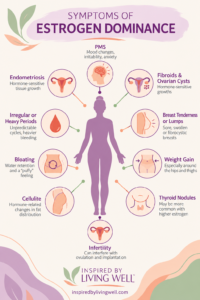
Some common symptoms include (I experienced all of these!):
- Heavy, light or unpredictable periods
- Worsening PMS
- Breast tenderness
- Bloating
- Mood changes, anxiety or irritability
- Fatigue
- Headaches
- Weight changes
- Lower libido
And here’s the important part: these symptoms are information.
“Estrogen dominance” is not an official medical diagnosis, and these symptoms can have many causes. But recognizing patterns can be an important first step toward having better conversations with your healthcare provider and understanding what support your body may need.
As a Perimenopause & Menopause Coach, I use a comprehensive Women’s Health Archetype Assessment to help identify symptom and lifestyle patterns, including an “Estrogen Excess” Type, and develop personalized lifestyle strategies around nutrition, movement, stress, sleep and other modifiable factors. When appropriate, that also means partnering with your healthcare provider for further evaluation and treatment.
Because perimenopause shouldn’t be about guessing what’s happening to your body.
It should be about learning how to listen to it and developing a personalized plan to work with your body. If estrogen dominance/excess sounds like you, and you want to learn more about what you can do, I’m here to help.
Source: Midi Health, “12 Estrogen Dominance Symptoms in Women,” medically reviewed by Suzanne Shores, MSN, APRN, CNM, FNP-C.